Small & Farm Woodland of the Year Award 2026
Congratulations to Gold winner Hole Park Estate – Agroforestry Plantations and to Silver winner Great Thorndean Woods.
Sponsored by FSC, the Small & Farm Woodland of The Year 2026 recognises and rewards smaller woods which have been actively managed in the last ten years, and is aimed principally at the hands-on woodland owner, including farmers.
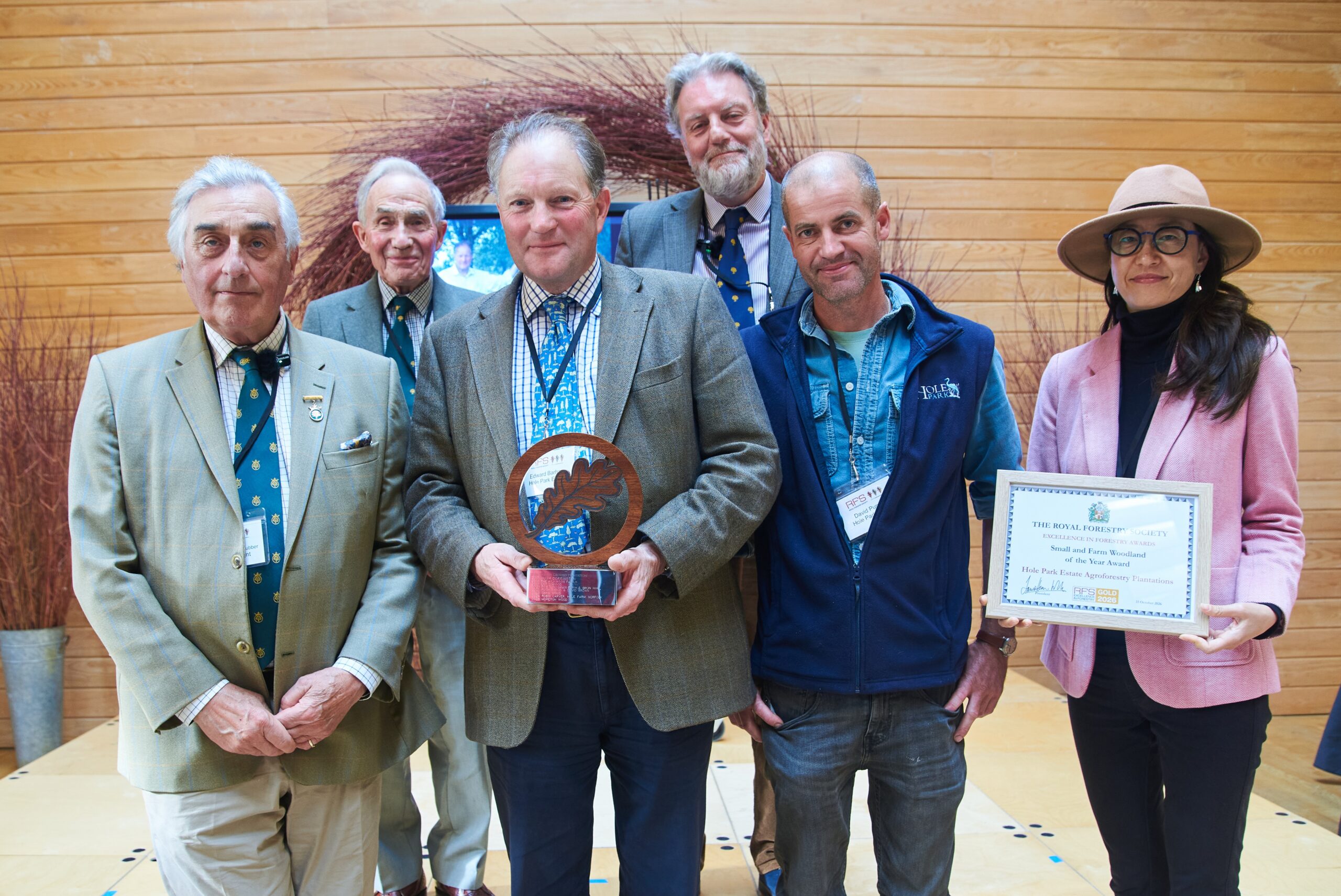
Gold winners: Hole Park Estate – Agroforestry Plantations
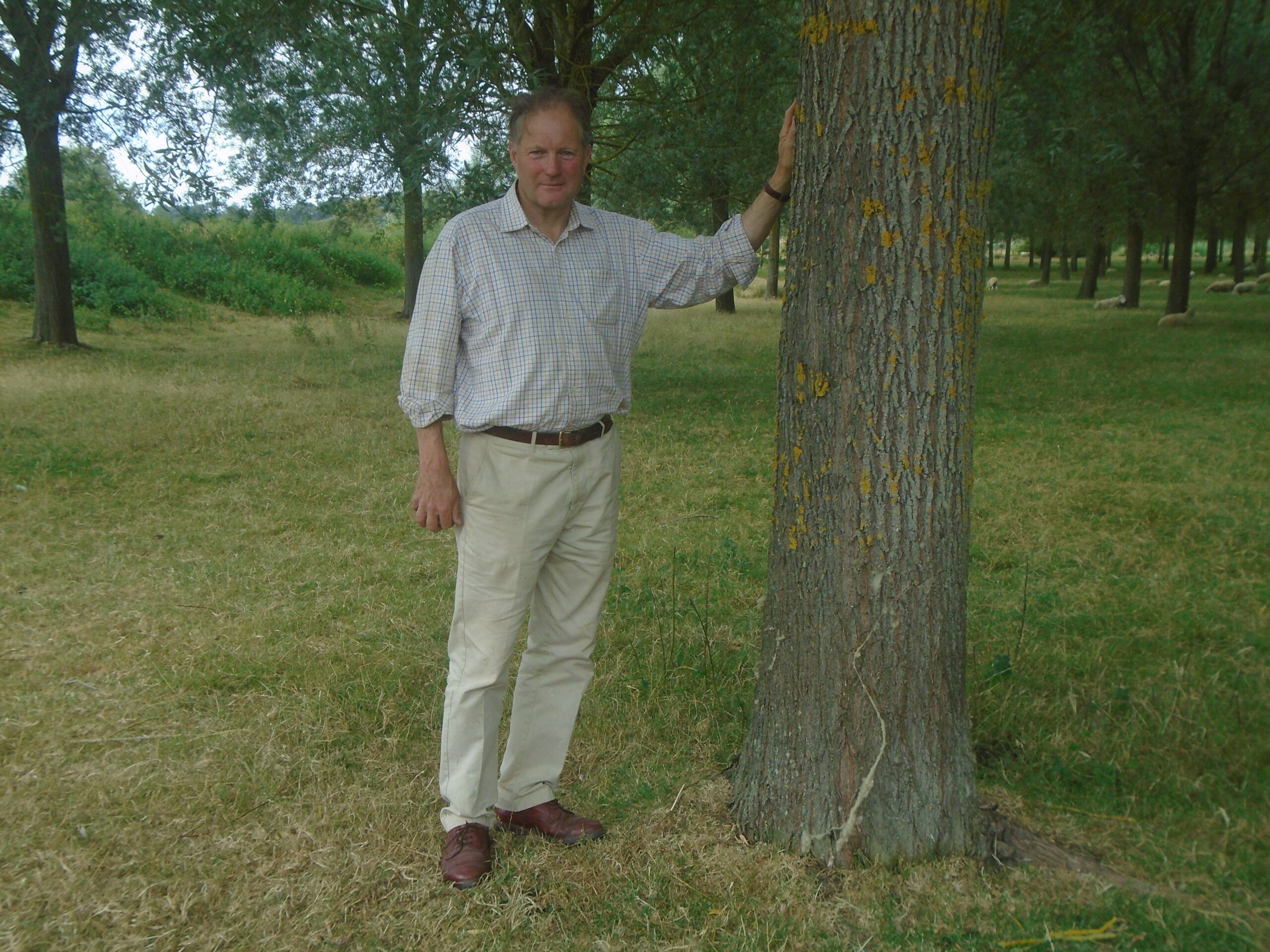
“Edward Barham has been practicing agroforestry, producing very high-quality cricket bat willow for over 25 years, and from what we saw was ahead of the curve in the production of butts to the rigorous specification of the buyers. A full range of planting years, from one-year-old setts to mature trees, were visited.”
The Small and Farm Woodland of the Year Award is accepted by Edward Barham, owner of Hole Park Estate, for 20 hectares of specialised cricket bat willow plantations in the Weald of Kent.
“I am delighted to win, for the second time in succession, this award for our agroforestry cricket bat willow plantations,” says Edward. The award was last held in the South East region in 2019, when he won with these same plantations, then in their infancy. Seven years on they are reaching maturity, and harvesting began in October 2026.
Cricket bat willow is an exacting crop. Growing it to the buyers’ minimum girth of 60 inches at breast height, achieved from the tree’s seventh year, takes constant attention. Judges noted the frequent pruning, bud rubbing and near-daily vigilance against adventitious buds needed for this excellent rate of growth.
The trees are grown on low-lying ground that floods through the winter, conditions the willow thrives on even as they make access difficult. Between the rows, the land is grazed by sheep rather than cattle, whose greater weight would cause damage. Even sheep have to be carefully managed: the bark, rich in minerals and salicylic acid, proves such a draw in late autumn that flocks must be taken off the plantation entirely from November through the winter. That same richness is what worries Edward most about beavers. Should the animals return to the river catchment, as some fear they will, they would find little to resist in a stand of soft willow stems.
Cricket bat willow isn’t the estate’s only forestry enterprise. Hole Park is also known for the quality of its oak and runs a thriving wood fuel business supplying chip and fire logs, alongside its Christmas tree plantations. Beyond forestry, the estate’s gardens will celebrate 100 years of opening to the public in 2027, drawing visitors from April to October, including each spring for the bluebell walk, while the wider estate also hosts a wedding venue and campsites.
“I am proud to show how the barrier between forestry and farm can be adapted to the mutual benefit of both sectors to produce fine forestry plantations, with farming continuing underneath,” says Edward. “The two sectors have traditionally seen such a hard divide between them but with climate change upon us, I am sure there will be more cases of this sort of diversification.”
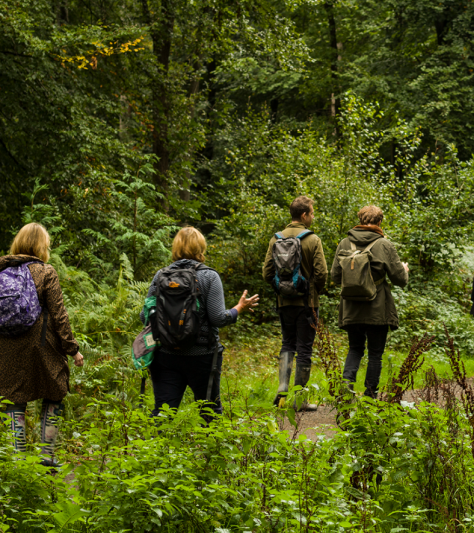
Silver winners: Great Thorndean Woods
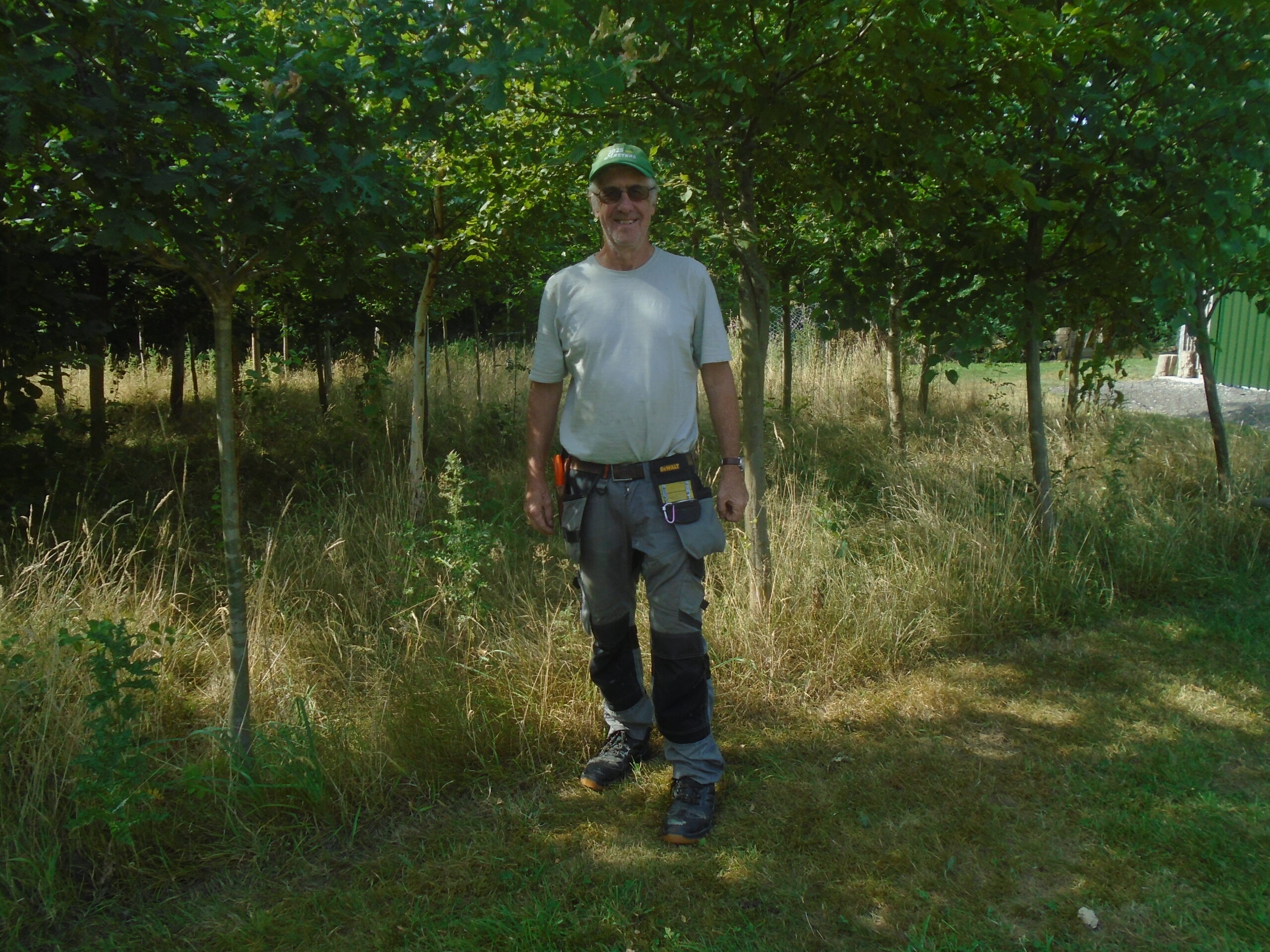
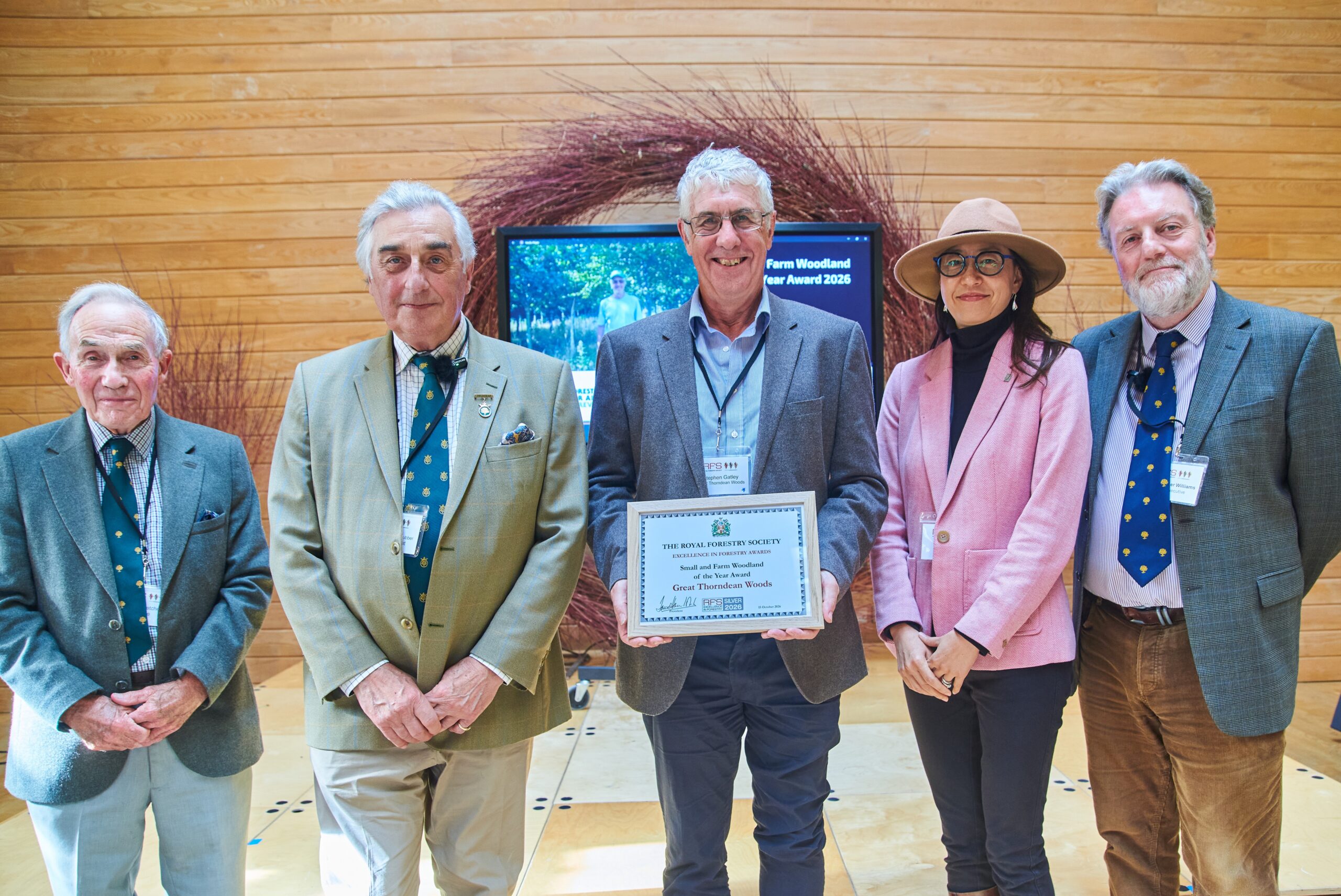
“A worthy winner of the Silver Award in Small and Farm Woodlands, we were impressed by the thorough and clear approach to achieving a mixed broadleaved crop… from what was previously in a poor condition into what is now much restored and healthy.”
Picking up the Silver Award is owner Steve Gatley, of Great Thorndean Woods, a 20-hectare parcel in West Sussex.
A mining engineer whose career took him around the world, Steve bought the wood on retirement. “Serendipity saw a 75-acre block of woodland and open pasture come up for sale immediately behind my house at the time of my retirement,” he says. “As a lover of the outdoors and never one to shirk hard work, the opportunity was too tempting to miss. It has been a healthy activity and life-changing experience to nurture the newly planted trees and bring the surrounding mature woodlands back into management, with improvement in biodiversity rapidly becoming evident.”
Half the site is an ex-Woodland Trust plantation, planted in 2019 on ground the judges found in poor condition, and now much restored. The rest is older and semi-natural woodland running along a ghyll stream, with some fine oak and ash and younger pole-stage crops that have been recently thinned.
The judges were struck by how methodically Steve has approached the younger broadleaved crop: interrow mowing has kept coarse vegetation down and left every tree accessible. Alternate row mowing is still an option to let the ground flora flourish even further.
He has been photographing the same points across the wood for several years, building up an archive that will only become more valuable as the canopy overhead closes and the planting rows reveal themselves fully.
A small area of oak has suffered from moderate squirrel damage, which Steve plans to resolve by racking every seventh row and by removing the worst affected trees. Firewood from windblown material and early thinning goes to friends and neighbours along his road, several of whom also walk their dogs through the wood.
As a self-confessed novice to woodland management, he has credited Tim Saunders of Silva Woodland Management, who helped to guide early decisions and draw up a woodland management plan for the surrounding ancient and semi-natural woodland. Saunders still visits periodically, and Steve readily admits he would still be lost without him.
“I am delighted to accept this award,” he says. “It’s an encouraging acknowledgment of the huge amount of effort I have put into both learning a new skill in retirement and ensuring over 23,000 newly planted trees thrive, and that the adjacent Ancient and Semi-Natural woodland has been brought back into management over the last five years.”

Harry Duncton
Harry Duncton is a freelance journalist who writes about outdoor technology, from robot mowers to leaf blowers and other power tools. His work appears in BBC Gardeners' World Magazine, T3 and Trusted Reviews, and he tests equipment in real-world conditions in Devon.