Phytoremediation: Can Plants Work Together to Clean Our Cities? A Research Update
Aakash Basi, PhD candidate at Birmingham Institute of Forest Research (BIFoR) and RFS Viking Bursary recipient 2025, explores if plants can extract and stabilise contaminants in the soil where local authorities struggle.
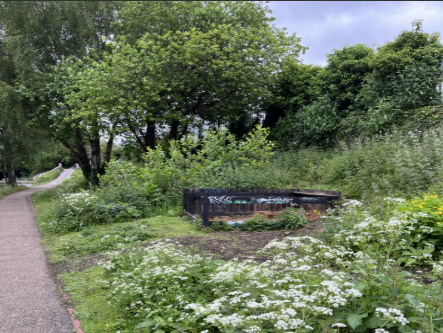
The benefits of urban green spaces are enormous to communities, wellbeing and mental health. Yet across cities such as Birmingham, patches of land sit unused; a consequence of an industrial history. Leaded petrol, factory works and river barges deposit heavy metal contaminants in soils and watercourses. As these contaminants do not biodegrade they are left to cycle between media, accumulate and transfer through food chains. Local authorities often do not have the resources for remediation and even then, traditional methods involve dredging and can disrupt local ecology. As such, finding a low-cost and eco-friendly alternative is essential. My research explores whether plants themselves might offer a solution. Thanks to the support of the Royal Forestry Society, that work is well underway.
Phytoremediation is the process of cultivating plant species known to extract or stabilise contaminants in soil. It is a promising low-cost and ecologically sensitive approach to brownfield remediation. Rather than growing a single species in isolation (a monoculture), I am comparing how plants perform when co-planted in multi-species arrangements — measuring their heavy metal uptake, growth and survival under both conditions.
The rationale is rooted in soil ecology. When multiple species grow together, the diversity of organic compounds and proteins they release into the soil (known as root exudates) will change. This, in turn, can alter nutrient cycles and the soil microbiome in ways that may enhance each plant’s ability to accumulate contaminants. For example, an increased concentration of organic acids (such as malic or citric acid) can mobilise phosphorus bound to organic matter, increasing its bioavailability. In short, plants in a community may outperform plants in isolation as they may benefit collectively from the unique compounds each release into the soil.
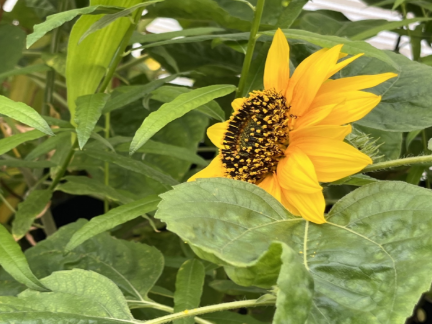
One species at the heart of this work is willow. It performed well as a co-plant in earlier experiments and is suited to the small urban green spaces where contaminated land is found. With this in mind, I grew sunflowers in monoculture as well as alongside willows, measuring the organic content of their root exudates.
The broader aim is to develop practical guidance for using willows in conjunction with other species to inform contaminated land management strategies, particularly in urban areas. Early results are encouraging: there appears to be an increase in root exudate organic content when sunflowers are co-planted with willows. This is an exciting finding. It opens the door to deeper questions about the nature of plant-plant interactions and the mechanisms by which intercropping might enhance phytoremediation efficiency, questions that will shape the next stages of the research.
None of this would be possible without the support of the Royal Forestry Society Viking Bursary. It has been instrumental in enabling this research to take place, covering analysis costs and lab time. I am deeply grateful to the Society for investing in this work and I look forward to sharing further updates as the project develops.
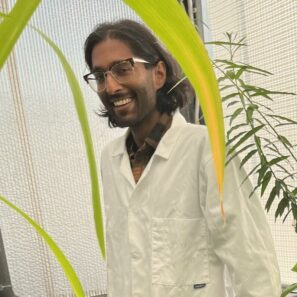
Aakash Basi
PhD researcher in the Department of Physical Geography at the University of Birmingham
Now in his final year, his thesis explores the application of phytoremediation in urban soils and how practices can be enhanced by using multiple species in place of a monoculture. Throughout this work, he has collaborated with local charities and volunteers to conduct small-scale studies on heavy-metal contaminated sites in Birmingham. Aakash has also been involved in outreach projects for Merck and primary school sessions on behalf of the University of Birmingham. He also worked as an intern in the Learning and Participation team at Royal Botanic Gardens, Kew.