National Careers Week: From volunteer to trainee forester
To mark National Careers Week 2026, Forestry Roots Trainee Lois Raines tells us about her career change into forestry.
The Forestry Roots traineeship marks a career change for me and has been a big shift in many ways. Having worked on climate change policy from a ‘big-picture’ perspective, I am excited to move into a career that has a direct impact on the environment and to begin working in a sector that aligns with so many of my values and interests, including climate action, traditional crafts and land justice.
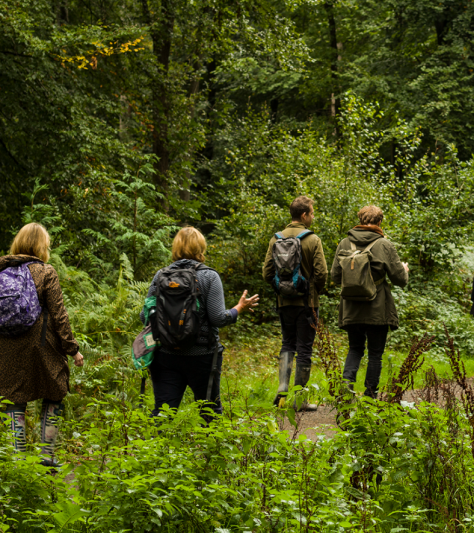
Last year, I was lucky to take on longer-term volunteer roles at two fantastic small woodland projects in the South West, where I had the opportunity to live and work in the woods. I soon realised that forestry and woodland management can take so many forms, and just how many threads it weaves together. I love that forestry can encompass vital work to restore biodiversity and climate resilience, as well as connecting people with landscapes and enabling access to nature. I am also motivated by the ways in which the sector could help to shift our material culture towards local and circular economies, while preserving and promoting traditional rural crafts and heritage. It is this unique combination that really drew me to consider forestry as a career.
Having gained some volunteer experience, Forestry Roots felt like an unmissable opportunity to continue to push my learning and to develop my skills through focussed, hands-on experience in a professional capacity. The chance to access training and mentoring was also a huge draw – I was at a point where I knew I wanted to continue woodland work, but had no professional qualifications and little sense of how I might fit into the wider industry. I was particularly keen to apply when I saw that The Hillyfield was a possible placement because I’d had a great volunteer experience there, and I am interested in working in woods where forestry is integrated into wider land management aims, such as community engagement.
In addition to the possible climate and environmental benefits at a landscape level, I am drawn to working in small woods because they can facilitate a close connection between the woodland ecosystem and the final uses of timber in craft and construction. At the Hillyfield, timber is grown, felled, and milled in the woods, and then used on site as well as sold locally. The story of the wood is there in the infrastructure around us: the barns we work in, the bridges we walk over, the fences and gate posts segmenting the land. I find it fascinating to be involved in the process of transforming trees into timber.
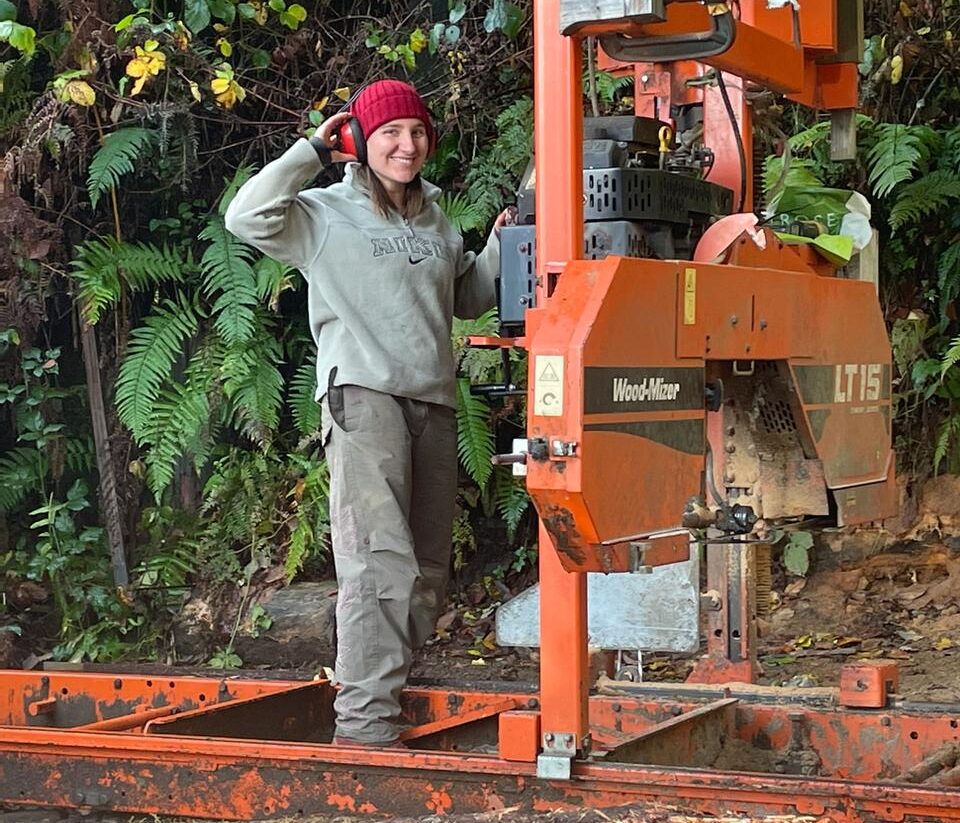
During my traineeship, I’ve been putting this into practice through a range of tasks across the woodland. I’ve learned to operate the Wood-Mizer sawmill and enjoyed milling fence posts for a new field boundary on the land. I loved this methodical process, the challenge of getting to know a new machine and to ‘read’ the wood and pay attention to its form. I hope to continue to develop my skills as a sawyer this year and to learn more about the qualities of different types of timber for construction.
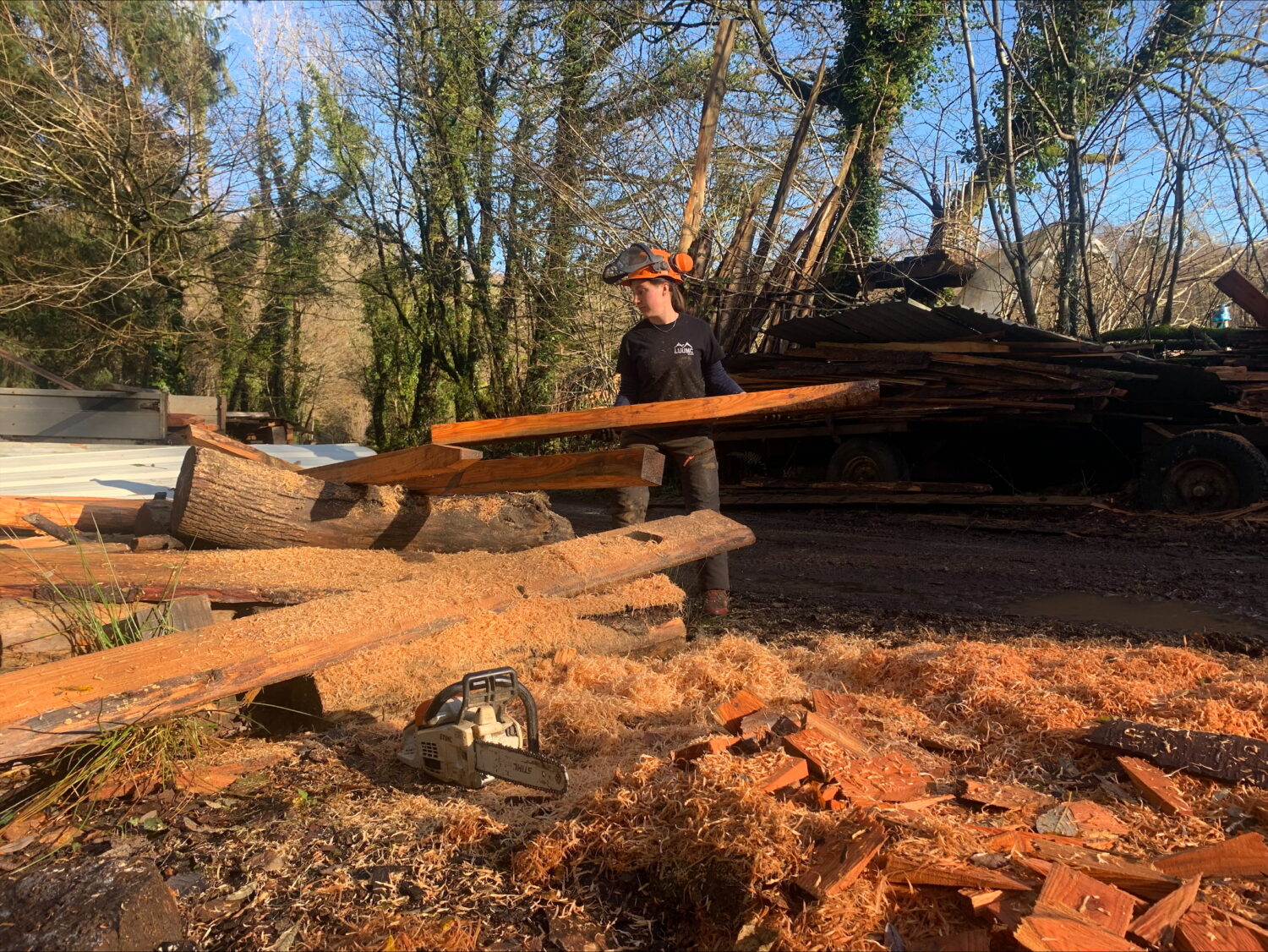
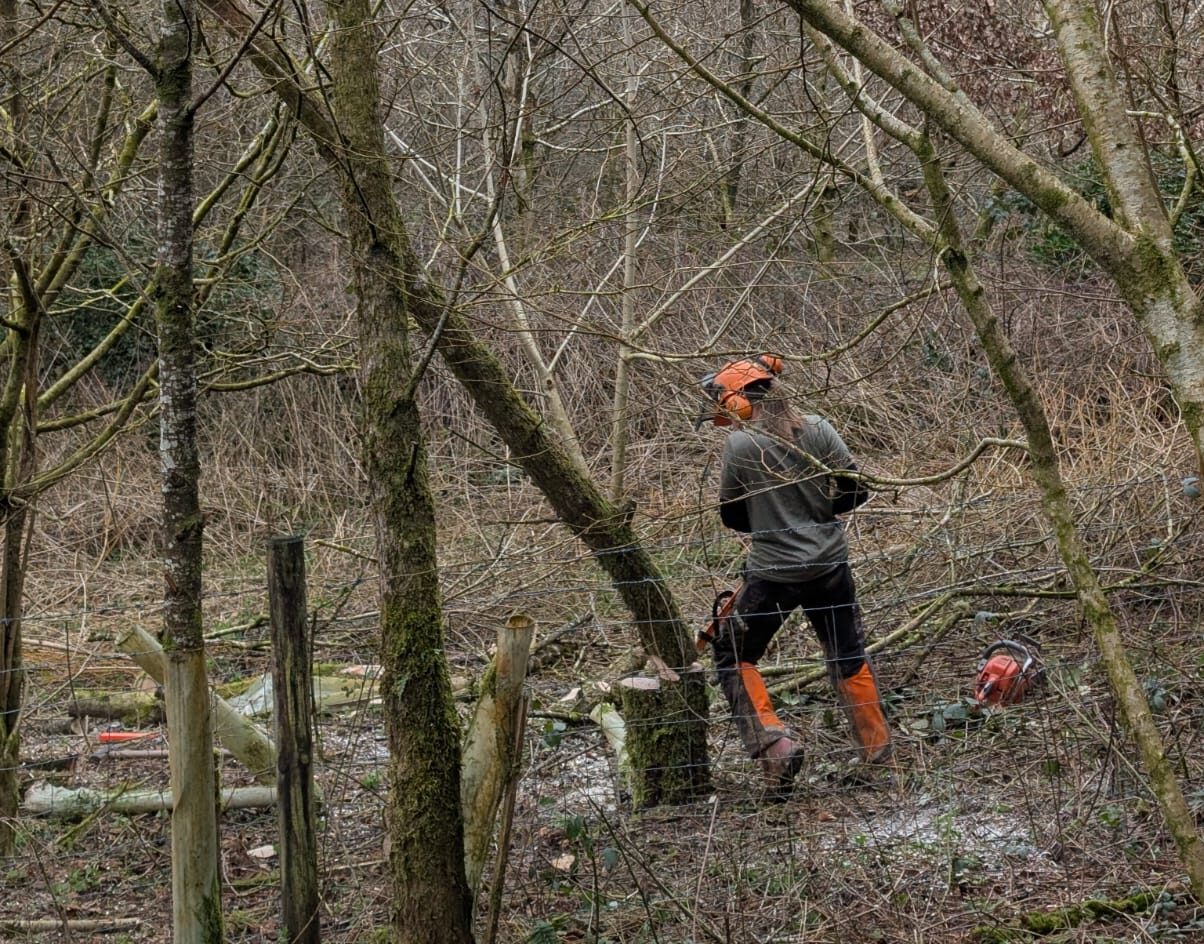
The training grant offered through Forestry Roots also enabled me to gain my tickets for chainsaw cross-cutting, maintenance, and felling small trees. I’ve since been gaining skill and confidence, and am really enjoying the combination of physical work with the problem-solving aspect, as each tree poses a different puzzle. One of my favourite jobs this winter has been carrying out formative pruning and thinning in the young broadleaf woods. I’ve been able to see how different tree species have established themselves on the site, learned about selecting which trees to fell and prune, and faced the challenge of mitigating and responding to squirrel damage.
Beyond the multitude of practical skills I’ve gained, working at the Hillyfield has deepened my appreciation of forestry as a mode of relating to the land, which encourages intentionality, deep ecological understanding, and necessitates a view of time beyond our human lifespan. To manage our forests sustainably, we must hold an awareness of the ripple effects of each decision we take. This feels like a huge responsibility, but also an incredible privilege, to engage with ecosystems and to learn from their denizens; to be attentive to the way we strive to balance the meeting of human material needs with ecological resilience. Timber is, after all, an intergenerational resource – an oak beam crossing over our heads holds deep connections through time. Working in the woods, I get a glimpse of past decisions made and chance occurrences that have shaped the land. And as I stand under an ancient beech, I am reminded to look to the future, to a vision of how we want the land to be, to who we want to be able access and enjoy it, and where we want our materials to come from.
Read more: