The Duke of Cornwall’s Award for Resilient Multi-Purpose Forestry 2026
Congratulations to Gold winner Swinley Forest and to Silver winner Reynolds & Holcot Wood.
Sponsored by Savills and TreesPlease, the Duke of Cornwall Award for Resilient Multi-Purpose Forestry recognises woods that are managed for ecological and economic resilience to threats such as pests, diseases and climate change, in order to meet commercial, environmental and social objectives.
Gold winners: Swinley Forest
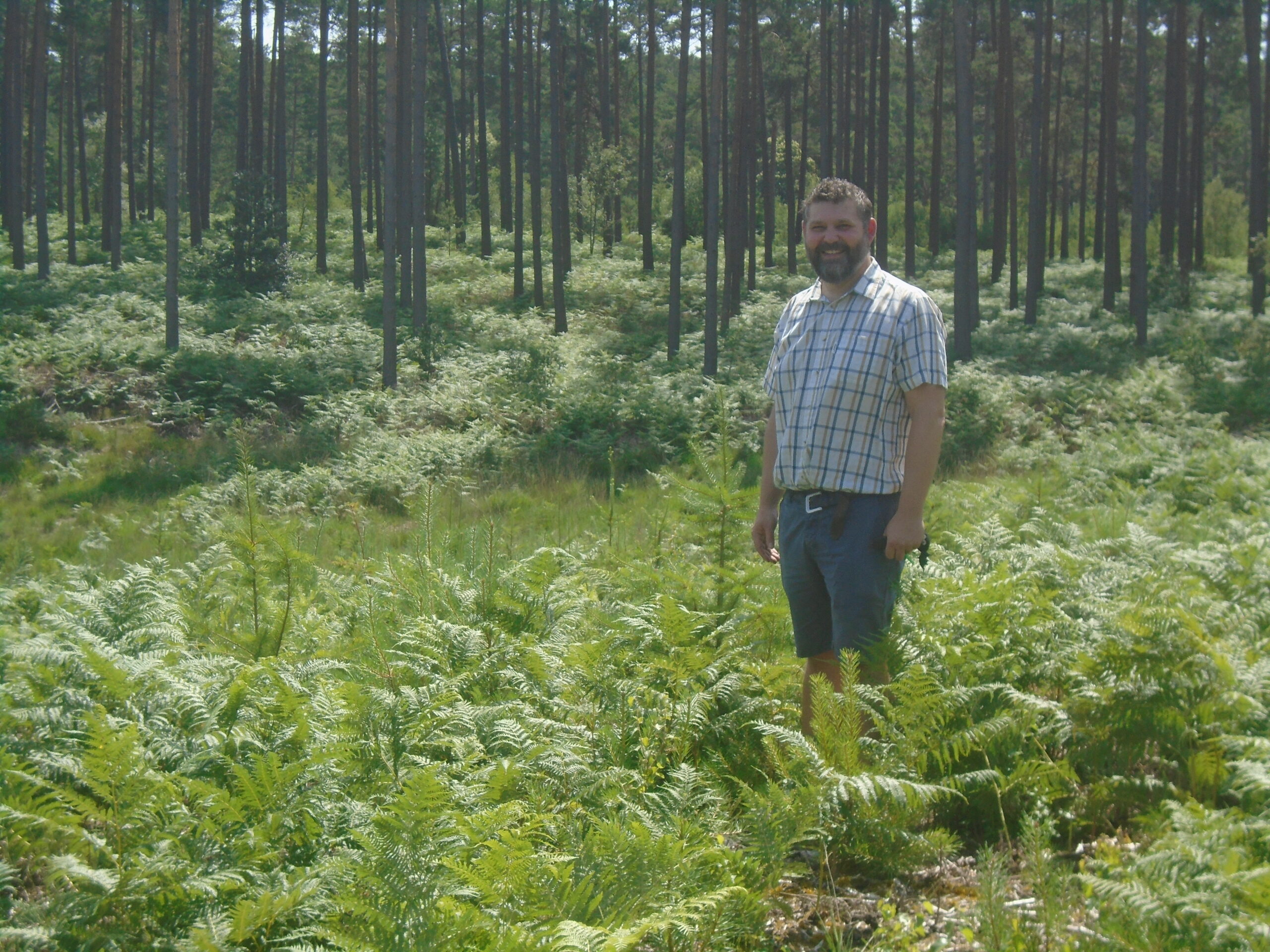
“This extensive forest area of 1,152 hectares, a short distance from Windsor, ticked all the boxes for a worthy winner of the Duke of Cornwall's Award in 2026. We were ably shown a good cross-section of the silviculture, recreation facilities and conservation work all within Swinley Forest by Chief Forester Richard Everett. All in all, an outstanding winner.”
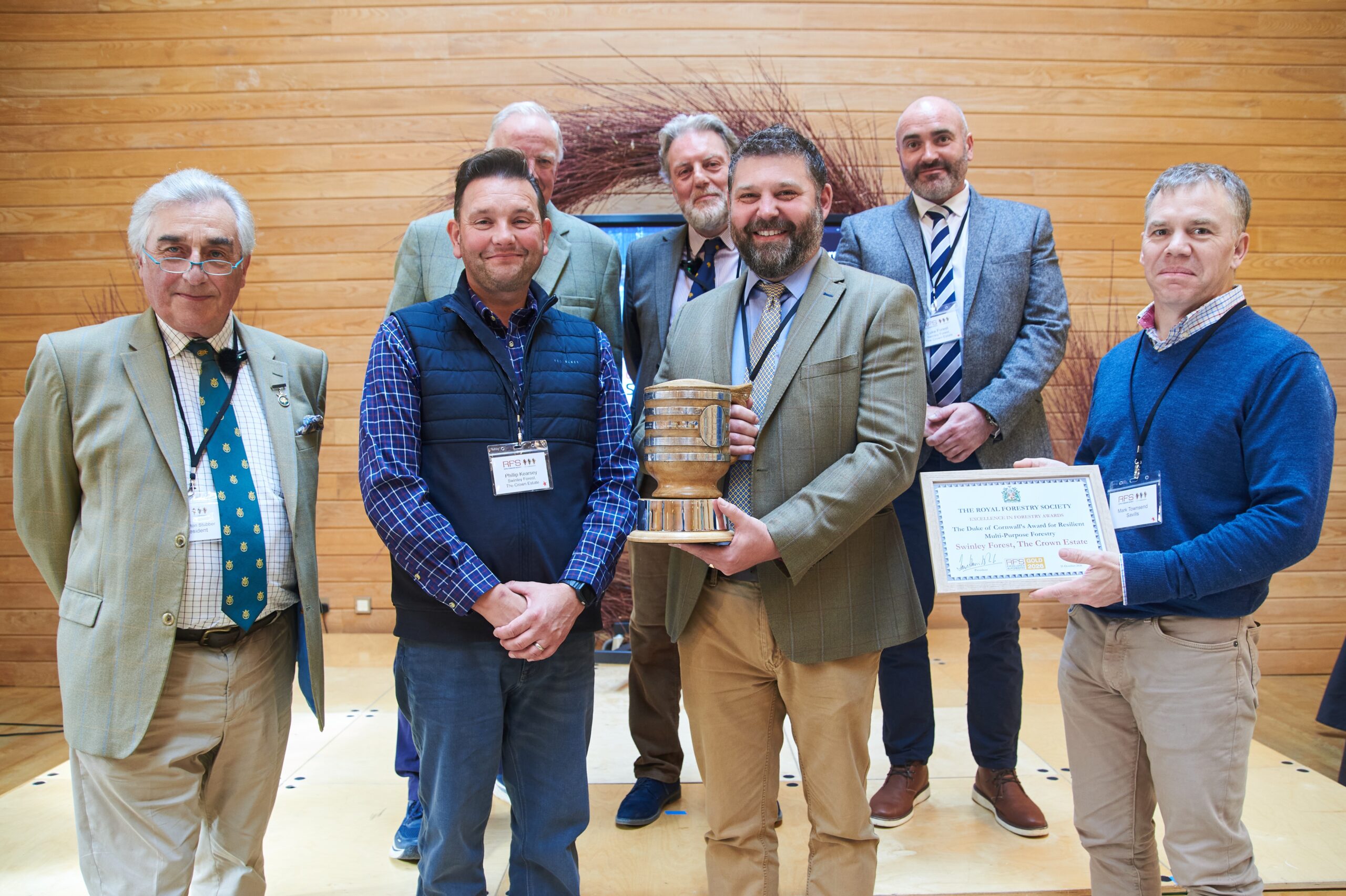
Swinley Forest has secured the prestigious Duke of Cornwall’s Award for Resilient Multi-Purpose Forestry, sponsored by Savills and TreesPlease. This Crown Estate holding close to Windsor has overcome the challenge of managing high-volume public access while building commercial and ecological resilience to a changing climate. Accepting the gold award are Chief Forester Richard Everett and Forest Managers Luke Forest and Phill Kearsey.
“The Crown Estate are delighted to receive this award in recognition of the work at Swinley Forest,” says Richard. “The resilience of the Forest is a testament to long-term, multi-purpose forest planning and delivery achieved by the team at Windsor.”
Swinley absorbs a level of recreational use that might overwhelm an ordinary working forest. A million visitors pass through the site’s central hub each year, taking part in everything from Segway rides to Go Ape. Many of them take advantage of the well-developed network of tracks and cycle trails. Larger-scale visits from film crews on location are another revenue stream that supports the commercial side of the forest.
All of this takes place on the notoriously poor Bagshot Sands. These thin, acidic, nutrient-poor soils have, for most of the forest’s history, left foresters with only two realistic options: Scots pine or Corsican pine. Richard and his team are now shifting towards mixed woodlands, with Douglas fir targeted as a long-term final crop on the better soils and interplanted row by row with reliable Scots pine. They have also trialled cautious planting of other conifers, along with limited numbers of broadleaved sweet chestnut and birch.
Judges were quick to praise the conservation work being done alongside, rather than instead of, the commercial operations. Rotational thinning and occasional clear felling across the 1,100 ha of plantations have created what they called “a mosaic of varying habitats for mammalian and avian species. Simple pools and scrapes have been created by building leaky dams on the perennial streams in forest valleys, giving many species an excellent habitat range.”
For Richard, those strands belong together. “We aim to deliver nature recovery at a landscape scale whilst providing high social value through our recreation opportunities,” he says. “Commercial forest management remains a key objective and the Estate is proud to continue producing significant quantities of sustainable timber into a range of markets across Southern England.”
Silver winners: Reynolds & Holcot Wood
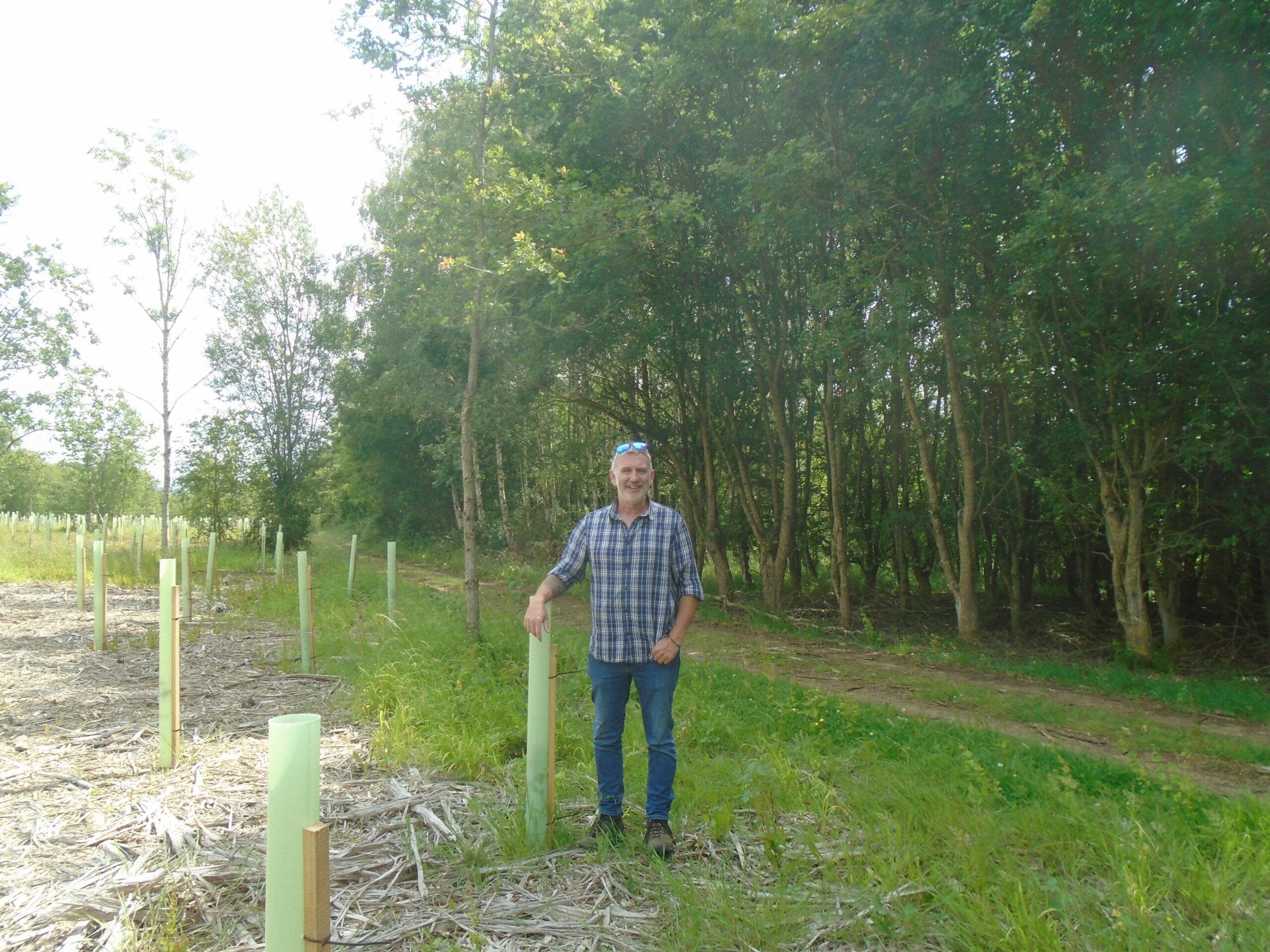
“Luke has his eye on the markets and novel woodland outlets... His innovative approach to managing Reynolds and Holcot Wood certainly warrants the second prize in the Duke of Cornwall's Award.”
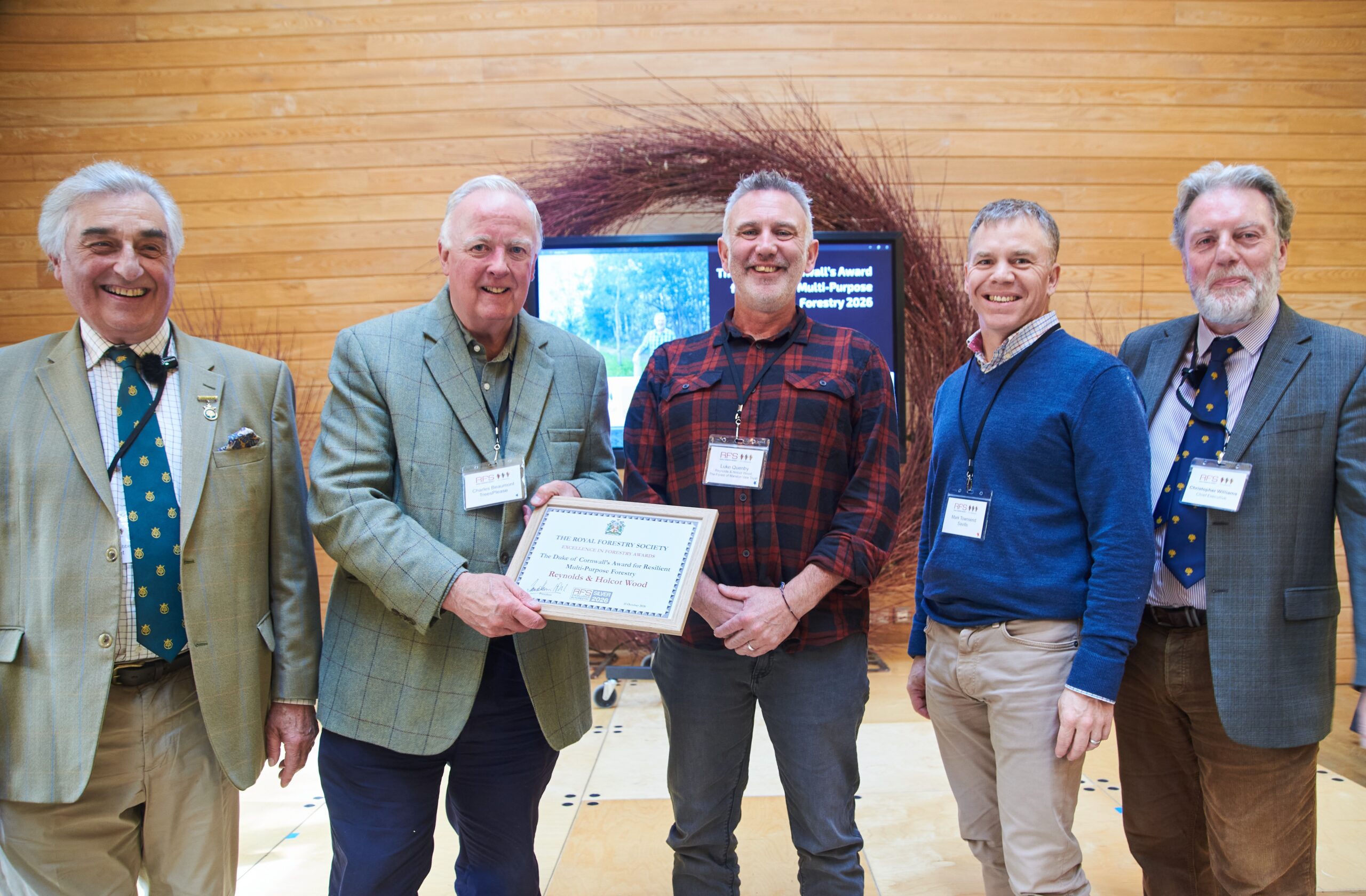
Community Forester Luke Quenby accepts silver for Reynolds and Holcot Wood in the Duke of Cornwall’s Award for 2026. Over his five years in charge, this tricky site, shaped by its industrial past, has been steadily turned around. Most of the woodland creation here sits on what was the largest expanse of brick clay extraction in Europe. Not only is much of the woodland on restored land, it’s also in Bedfordshire, the second driest county of England. Receiving just 650 mm of rain each year, the site has to be managed with water conservation in mind.
Owned by The Woodland Trust, but subleased and managed on a 30-year contract by the Forest of Marston Vale, Reynolds & Holcot Wood is 98 hectares offers what the judges called “a full cross section of different silvicultural and coppice systems adopted on widely differing sites within the plantations”
The woods sit on the second highest point in the county. With steep slopes and difficult access, judges were impressed by the restoration of the land during Luke’s relatively short stewardship.
Around 10% of the site holds Ancient Semi-Natural Woodland status. There are fine stands of oak and ash with a sparse coppice understorey, all managed with light thinning to keep a valuable sawlog income flowing. Now thirty years old, some rows of oak and ash are ready for harvesting. However, poor access has meant that the ever inventive Luke has had to devise a clever racking system to avoid damaging pipelines that pass through the site.
A recent five year old fenced area of four hectares has been planted with oak, hornbeam, some ash, alder, wild service, small leaved lime, field maple, spindle and hazel. Much of the ash on the site was damaged by Chalara dieback, which has since been removed except for some disease-free specimens. Some healthier crowns left untouched have been retained as overstorey, with oak underplanted in shelters below.
Conservation work has not been left out of the plan either. Volunteers have undertaken ride widening as well as studies of lepidoptera, ground flora, small mammals, and bats. A recently established 10-hectare fenced area has been planted as low-density wood pasture, a mix of oak, hornbeam, Scots pine, wild service and hazel, and is now grazed by a local herd of Highland cattle from July to February, timed to protect ground-nesting birds and wildflowers during the spring and summer months. This steep section with poor soil was ideal for the task, and judges praised the entrance gate to this enclosure that was made entirely from cleft material.
“There was a huge amount of hard work, resource, and faith shown to get this project off the ground” says Luke. “To see the woodland thriving and generating income, employment, trainee and education opportunities alongside leisure, recreation, and biodiversity gains is amazing.” The Forest of Marston Vale Trust plans to publish a full account of the project, including its finances and process, in two years’ time.
He’s also quick to share the credit: with Matt George, the Woodland Trusts’ original site manager; the teams at TNRP and Rebel Restoration, who funded the project’s early stages; the staff and volunteers of the Forest of Marston Vale Trust, and local contractors Red Kite Rural, Wassaldine, and Woodland Forestry.
Careful and entrepreneurial stewardship has made this woodland able to become profitable, healthy, and innovative, and a worthy winner of the silver prize in the Duke of Cornwall’s Award.


Harry Duncton
Harry Duncton is a freelance journalist who writes about outdoor technology, from robot mowers to leaf blowers and other power tools. His work appears in BBC Gardeners' World Magazine, T3 and Trusted Reviews, and he tests equipment in real-world conditions in Devon.