Children of the Forest: Managing a 3-acre woodland for learning and habitat
A forest school in Devon is celebrated for combining child-led education with responsible management of its site.
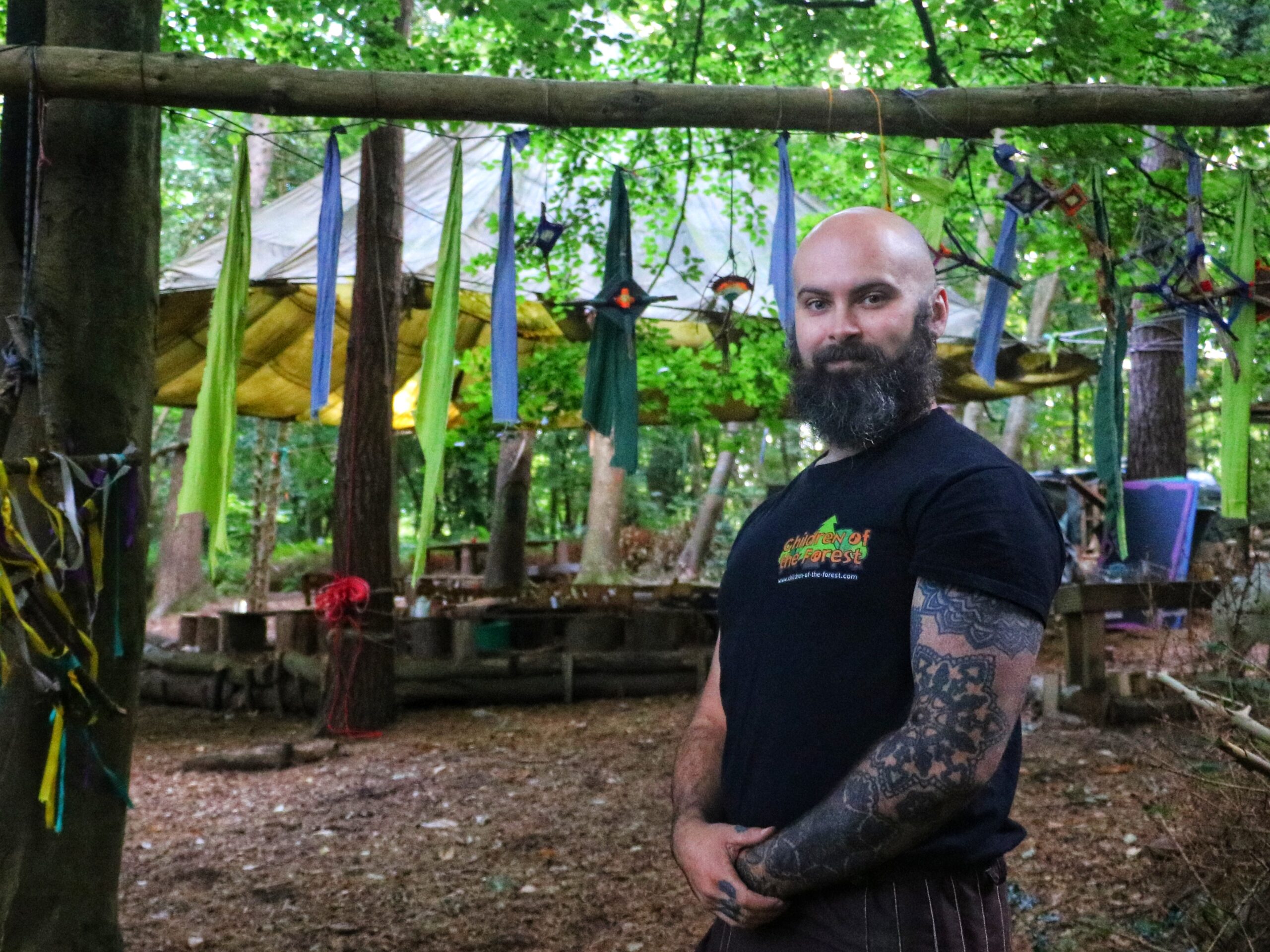
Children of the Forest turned a 3-acre Devon wood into a learning environment centred around child-led pedagogy and sustainable woodland management. Their forward-thinking approach was recognised with Gold in the Education and Learning category at the Royal Forestry Society’s 2025 Excellence in Forestry Awards, supported by PEFC UK and the Duchy of Cornwall.
Judges praised Children of the Forest’s founder Lewis Ames for delivering engaging, hands-on outdoor learning rooted in the principle that the best way to learn is through choice, active participation and real-life application.
The approach is built on the six forest school principles:
- Long-term practice
- Takes place in a natural environment
- Involves holistic planning and activities
- Run by a qualified forest school leader
- Risk-taking is integral to the process
- It happens with the same group of people over a long period of time.

These principles provide the foundation of Children of the Forest’s work, but Lewis’ approach has evolved from this over time. He now sees his role centring around community space-holding and holistic relationship building.
Lewis commented: “It may look different from some other forest schools, where the focus might be on participants leaving sessions with specific bushcraft skills or completing a defined period of social or emotional development. When we hold authentic community in spaces where nature-based activities are taking place, these things emerge naturally without needing to be imposed.”
Pedagogy based on intuition, interest and relationships
One of the best ways to engage and learn is by being able to ‘do’; to experience real life examples and get stuck in with some hands-on activities that inspire. That is what you get when you join a session at Children of the Forest.
Children are encouraged to lead their own play, facilitated by the forest school leader. This means allowing participants to follow their interests and believing that their ideas have educational and developmental value. By valuing their autonomy and interests, a relationship builds between them and the facilitator.
Facilitators are encouraged to say ‘yes’ as much as they can, enabling participants to follow their intuition and creativity.
Supporting neurodiverse learners and those with negative experience of education
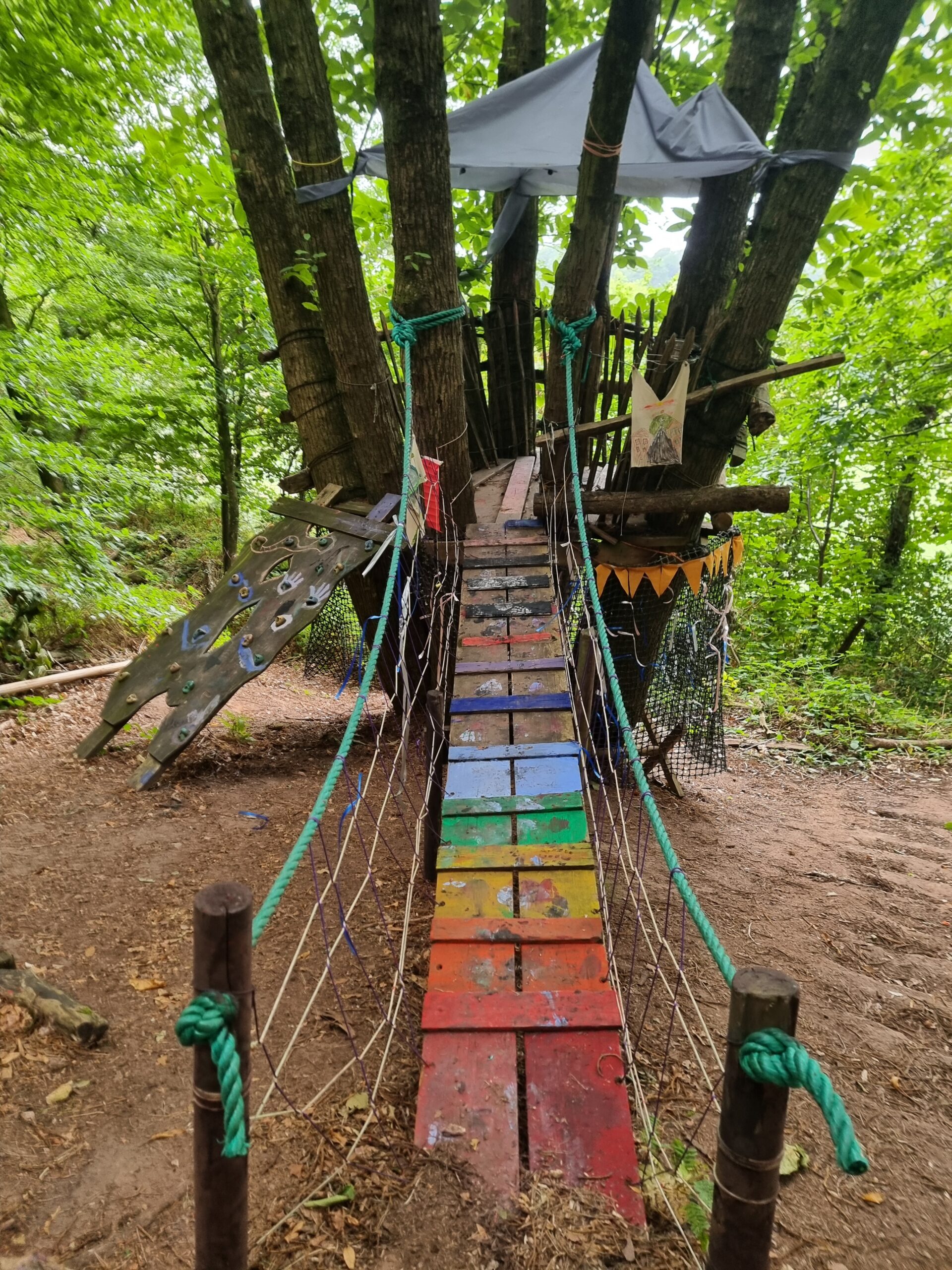
Activities at Children of the Forest range from tool use and open-fire cooking to clay oven building and planting a small orchard.
This is proving particularly successful with neurodiverse individuals who do not always respond to conventional approaches to learning. This also goes for those who have had poor experiences with education or may be coming into sessions with anxiety or low confidence.
Lewis says this is about validating their experiences rather than telling them things like “it will all be okay”. The long-term nature of this way of working allows them to take a more holistic approach to each individual’s development, accepting that this process takes time.
Defining non-judgemental learning
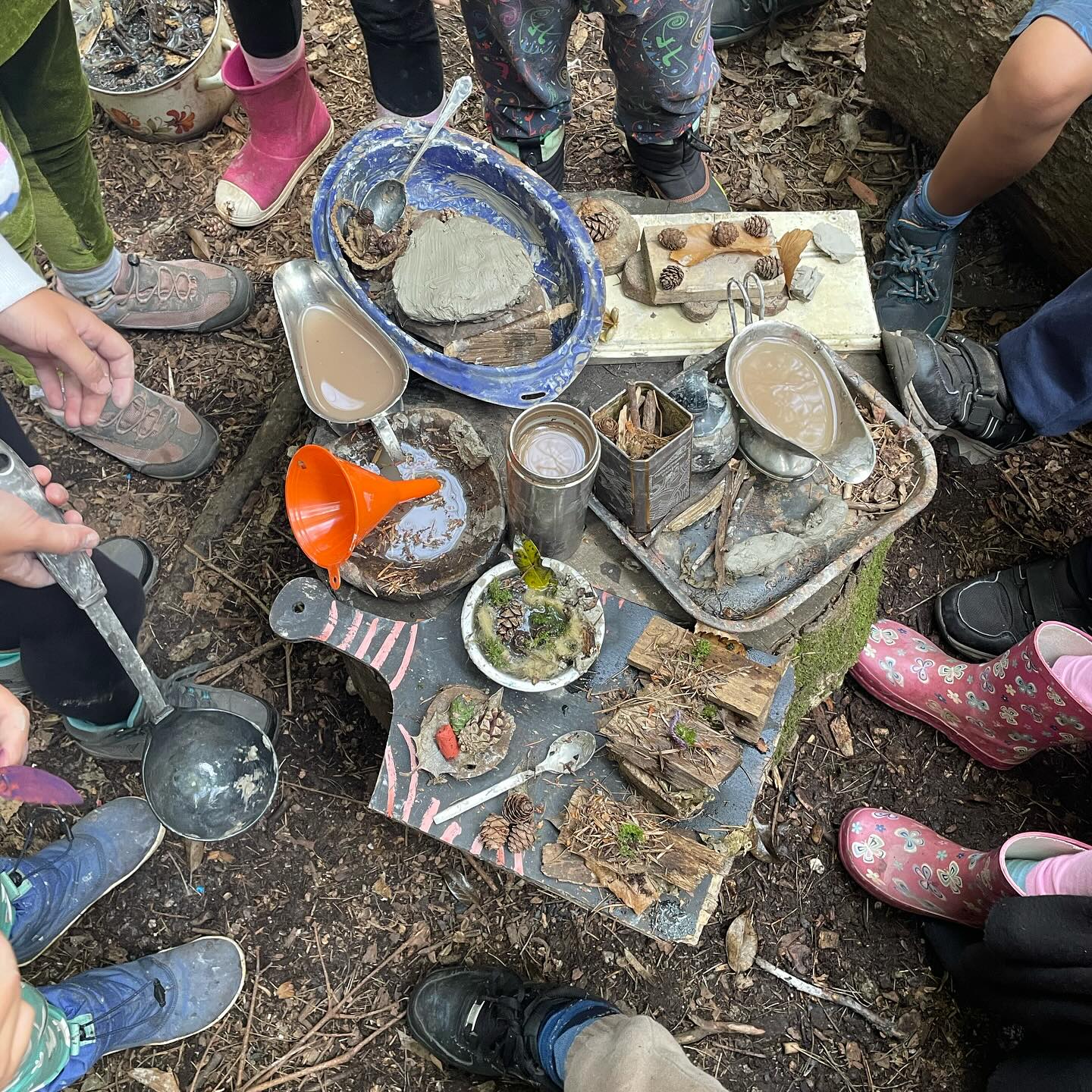
Non-judgemental is a term that forms the backbone of the Children of the Forest’s ethos, but Lewis stresses that it should not be confused with simply being permissive. What it means is to support behaviour and practical skills development in ways other than through judgement, praise, rewards, punishments, sanctions or verbal measures. Instead, they promote behaviour and skill development by controlling the environment.
“This might involve the physical space we set out, the way we position logs or benches, or the resources we make available,” said Lewis. “We decide what is available freely and what is available by request. We also control the ratios at which we are comfortable working. As much as we try to say ‘yes’, we are also transparent and honest with participants.”
Lewis and his team also provide one-to-one support, modelling, social stories, providing different activities and empathetic discussions.
Sustainable woodland management
Although from a teaching background Lewis has built his knowledge around woodland management since purchasing the 3-acre site.
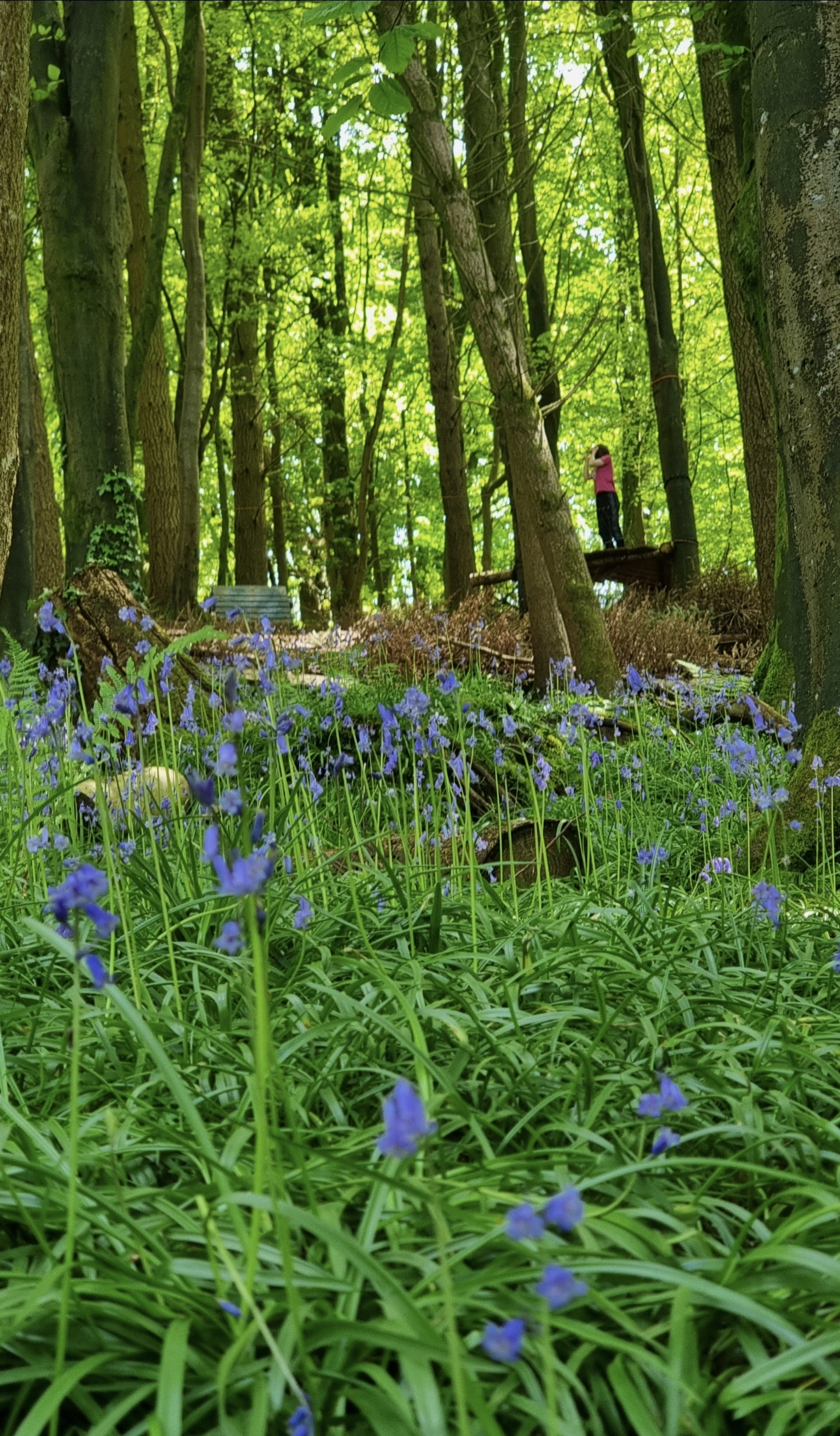
The site contains the overspill of a conifer plantation and ancient woodland with bluebell cover and significant examples of horse chestnut and beech. Unmanaged for over 30 years, a major challenge was managing out-of-control holly that dominated the middle storey of the canopy cover. They have started to develop a mixed age woodland, planting hazel and juniper, the latter of which is unpalatable to the local deer population.
Lewis has worked closely with the Bulworthy Project to develop and diversify the site and secure funding. He has a woodland management plan where creating a space for play is the key objective. This was a first for the woodland management company.
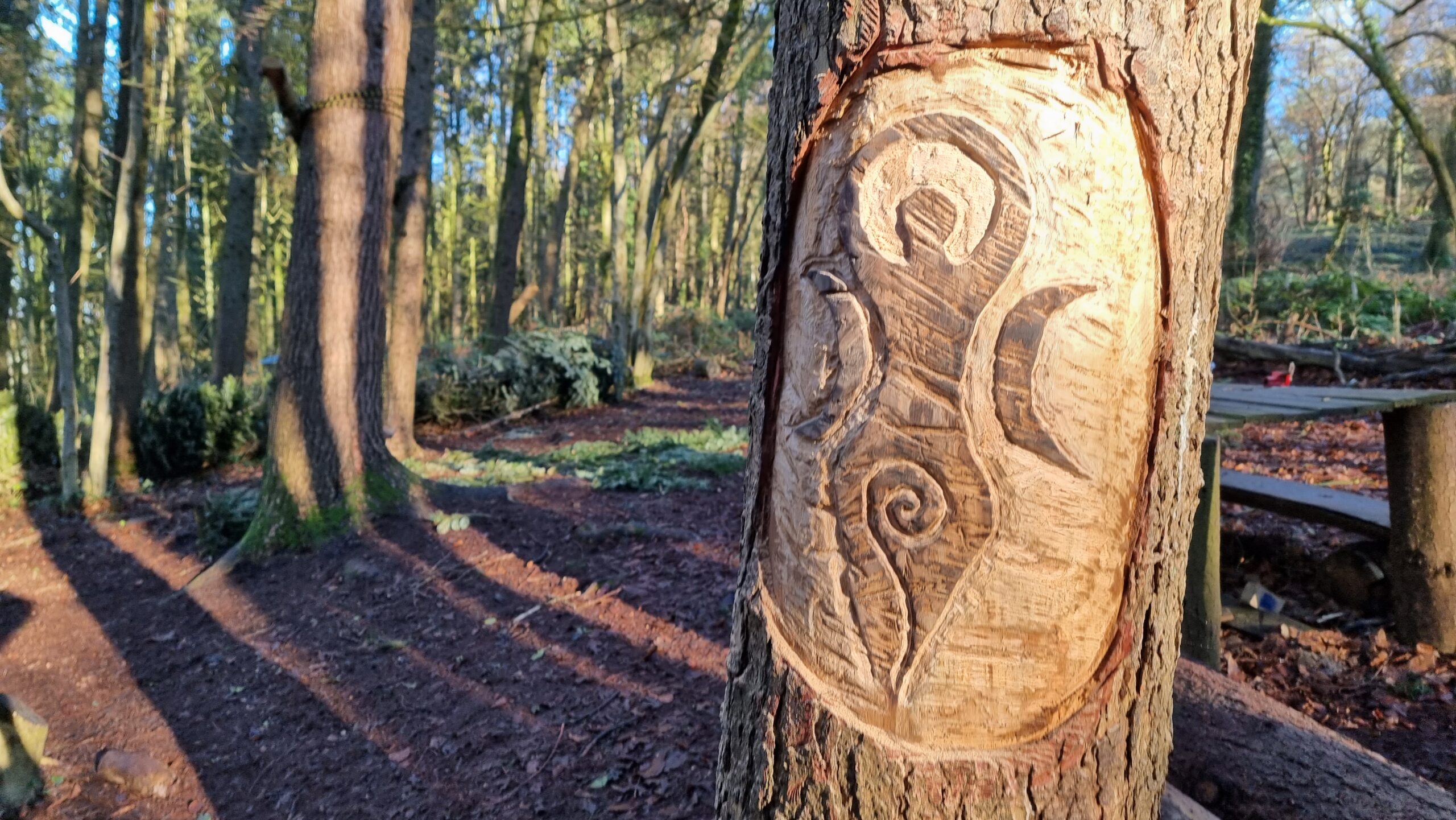
“We cut many trees at twenty to thirty feet high and coronet cut the tops to create lots of habitat,” Lewis said. “This means that at ground level, rather than having huge tree stumps everywhere looking like a graveyard, these trees remain tall, provide habitat, and because they are dead standing, offer huge artistic opportunity.
“We can carve faces, create handprints and put our own stamp onto the woodland without damaging living trees, which would be very detrimental to their health.”
Sessions are carefully managed to minimise ecological impact, maintaining well-kept paths for access and play, with undisturbed islands of nature space in between where flora and fauna can thrive.
He utilises wood (cut from within the woodland and recycled) for learning throughout the site and encourages young people to create everyday objects from wood using hand tools, from dartboards and seating to tree houses. He is mindful, however, of not overusing the wood’s resources so firewood is often brought in to provide enough fuel, thereby ensuring the sustainability of the woodland.
Engaging children in conservation
Conservation and maintaining the site is weaved into activities with children, from building ponds and bird boxes to maintaining paths and creating rides and scallops. Old Christmas trees donated by the local community are used to build dead hedges. All of this activity creates habitats and teaches participants about the part they play as stewards of the wood.
Lewis said: “When children want to do typical bushcraft activities like making bows or swords, rather than saying they cannot, we say, “Let us go for a walk and see what the woods has to offer today.” We go out with the understanding that the woods may not have resources to give us.”
“Wildlife cameras have shown the woods hosts badgers, deer, rabbits, foxes, barn owls, tawny owls, and we believe there may have been stoats, evidenced by scat found on a small tree stump. Therefore, we must make sure that our activities in the wood are sympathetic to the wildlife around us”
Working with the community and inspiring the next generation
Lewis has developed multiple local connections with other forest-related individuals and organisations within the community, allowing him to bring in outside expertise to support sessions with young people on a range of topics, from biodiversity to historical links with the woodland, landscape and local industry.
By bringing in specialists like woodworkers, blacksmiths and wildlife experts, it showcases to the children the many jobs to be explored in the outdoor sector when they get older.
Preserving joy in learning
With many young people and adults struggling with mental health issues, new approaches like this that can demonstrate real success in building self-confidence and self-esteem alongside skills, knowledge and life experiences are to be lauded.
“A huge part of what we aim for is preserving the joy in learning, curiosity and education,” Lewis added. “By respecting people’s autonomy and interests, we keep that spark alive and help people stay interested in education.
“It is about pointing out things and allowing children to build their own relationship with nature. In terms of education itself, it is about nurturing curiosity and allowing them to develop a long-term love and relationship with that curiosity.”
Have your work recognised in the UK’s premier forestry awards. Find out more about the Excellence in Forestry Awards.
Thanks to our sponsors
The Learning & Education Award is made possible thanks to the generous support of our sponsors, PEFC UK and the Duchy of Cornwall