Randle Travel Bursary
Through the generosity of the Trustees of the Donald Randle Trust, this bursary supports members to travel overseas to enhance their forestry knowledge.
Applications for 2026 are now closed!
Criteria
Applicants must either be a individual or student member of the RFS or work for an a RFS corporate member.
The Randle Travel Fund bursary will provide up to £1200 to cover part or all of the subsistence and travel costs when taking part in trips abroad organised specifically to enhance your forestry knowledge.
It is a condition of the Randle Travel Bursary Fund that each recipient must submit a written report (1500-2000 words) to RFS within three months of completion of the project. The report will be considered for publication in the Quarterly Journal of Forestry.
90% of the payment will be made in advance. The remaining 10% will be paid on receipt of the written report.
Projects should be completed within 12 months of a bursary being awarded. Applicants are encouraged to consider lower carbon forms of transport when planning their travel.
All applications will be treated with strictest confidence. A committee will be appointed by RFS to review all applications. No other information will be used to assess each application. Successful bursary recipients will be notified after the closing date.
Applications will close at midday on 3rd February 2026
Randle Travel Bursary Recipient 2026
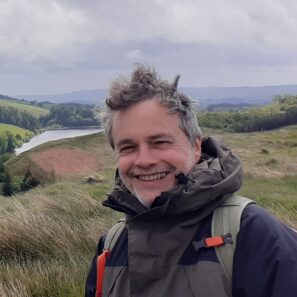
Tim Hall
RFS Randle Travel Bursary Recipient 2026
"I’m a Fellow of the Institute of Chartered Foresters and have well over 30 years of experience working for NGOs in environmental and social forestry. I have been self employed since 2025, running my own consultancy: Clear Thinking.
As well as more “conventional” woodland management, I have long been involved with urban forestry and greenspace management and I am keen to attend the 2026 European Forum on Urban Forestry Conference in Malmo. The EFUF meet once a year to bring together urban forestry researchers and practitioners to share experience and the latest thinking.
However, I was less keen to fly. Like many of us, I fly more than I’d like. So I decided to slow things down: take the train from Edinburgh to Malmo, enjoy the journey, and pollute a little less along the way. I will be stopping in some cities en-route, where I will explore some of the challenges and opportunities these cities face and compare how urban forestry has been used to manage them, before I arrive in Malmo for the conference. I will be posting a travel log on LinkedIn as I go.
Whilst travel by train is far more interesting and less damaging to the planet than flying, it is, unfortunately, a more expensive way to travel. So I am very grateful to the Royal Forestry Society for funding half my costs from the Randle Travel Bursary."