Converting Degraded Farmland to Community Woodland
How do you plant trees across 422 acres of degraded farmland in just one season to begin a new community woodland? For the charity Avon Needs Trees detailed planning, an army of volunteers and the support of funders like the Royal Forestry Society have turned a plan into reality.
Avon Needs Trees is dedicated to creating new permanent woodland throughout the Bristol-Avon River catchment to tackle the climate and nature emergencies. Lower Chew Forest is its fifth and largest project. The farm lies in an area between the Mendip Hills and the Cotswolds and falls within the new Western Forest region.
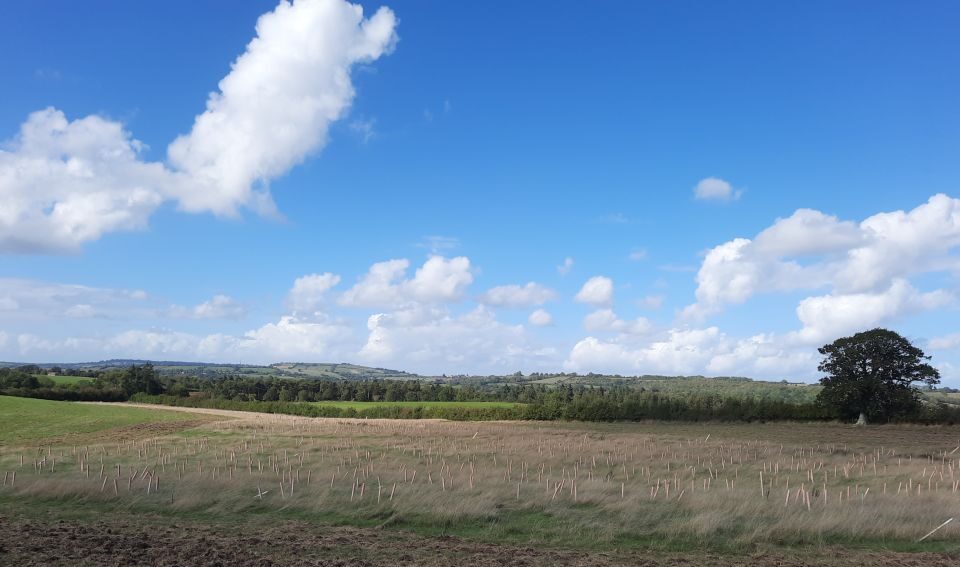
The charity successfully applied for RFS Grants for Resilient Woodlands to plant two very distinct areas within the former farmland. These were planted during the 2025/26 season. All trees were planted using sheep wool mulch mats. Avon Needs Trees acknowledges that the use of the sheep wool mats adds to the costs but believes this additional cost will be justified by higher than average tree survival rates. Groups of smaller trees (scrub) were intermixed with individual trees to grow on as standards:
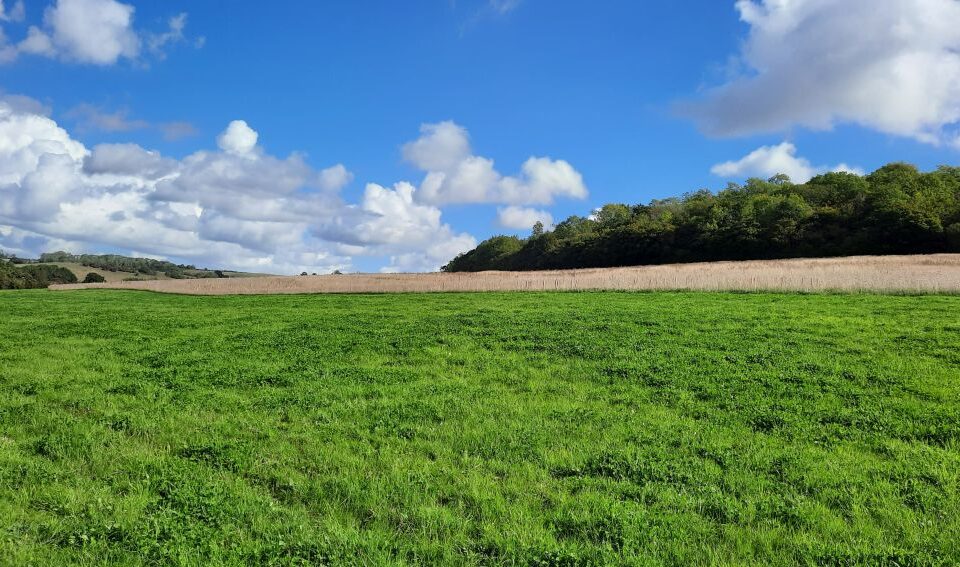
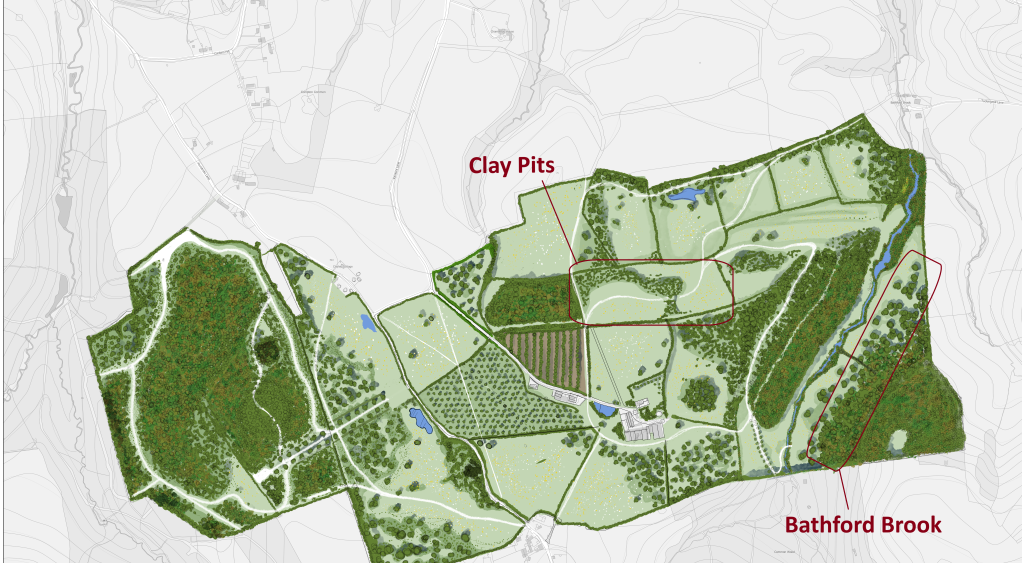
- Bathford Brook corridor, 4.14 ha (compartment 30b-31b): This is on a sloped limestone area which had been used for growing maize. Above the planting is an ancient patch of woodland known as Roundhill Wood. A natural regeneration barrier area has then been left between the ancient woodland and the new woodland, with a newly planted hedgerow acting as a divider. Below the new planting is a clover rich meadow leading down to the tree-lined brook. Once established the trees will provide additional connectivity for biodiversity between these areas. It has been planted with 3,737 trees.
- Clay Pits, I.86ha (compartment 22b): A former grazing field of gentle hills in an area straddling limestone and local mudstone. The plantings follow the contours of the land, linking to more densely planted woodland to the west and open fields and similar plantings close by. It has been planted with 2,187 trees
Aims and Objectives
Social
The farm is within reach of some of the most economically and socially deprived areas of Bristol. A mosaic of different woodlands and wildflower meadows have been planted. Existing footpaths are being restored and new ones created to increase access across the site.
The aim is to increase opportunities for people to get involved in nature.
Educational workshops and an educational hub are being developed and a thriving army of volunteers is working hard across the site.
The use of buildings on site for local small business enterprises sympathetic to the woodland are being explored.
Environmental
The aim is to help tackle climate change through carbon sequestration and by improving biodiversity.
An Ecological Appraisal Report, wildlife monitoring, bioacoustics surveys across the site and Environmental DNA sampling in the brook have provided a baseline of protected and notable species present. A number of target species such as stag beetle, purple hairstreak butterflies and a range of bat species have been identified.
The Bathford Brook site had recently been used for maize. The new planting will stabilise soils and slow run off flow to the Bathford Brook and on to the River Chew. This will help prevent silting of the brook and flooding further downstream at Keynsham where the River Chew meets the Avon. It will also eliminate fertiliser run off and benefit the river life.
Commercial
Some of the trees planted elsewhere on the former farm site may be coppiced for wood products like fencing posts. A walnut grove might provide crops like walnuts.
Species Choice
Consultations with local residents and farmers, input from the Bristol Avon Rivers Trust, South West Heritage, The Forestry Commission, Bath and North East Somerset Council and the Environment Agency fed into the plans
Species were also chosen according to Ecological Site Classifications recommendations.
Blackthorn Buckthorn
Crab apple Dog rose
Dogwood Field maple
Guelder rose Goat willow
Hawthorn Hornbeam
Oak Small leaved lime
Spindle Sweet chestnut
Wayfairing tree
Provenance
Avon Needs Trees aims to source 20% of planting stock from continental seed provenance. This is in line with Forest Research’s 2080 climate predictions of a climate similar to the west coast of France.
A further 20% is sourced from 405 provenance – South East England.
Trees were provided by
- Cheviot Trees
- More Trees BANES Community Tree Nursery Project
- British Hardwood Tree Nursery
- Alba Trees
Planting
All trees were planted out during the 2025/2026 season mainly by teams of trained volunteers.
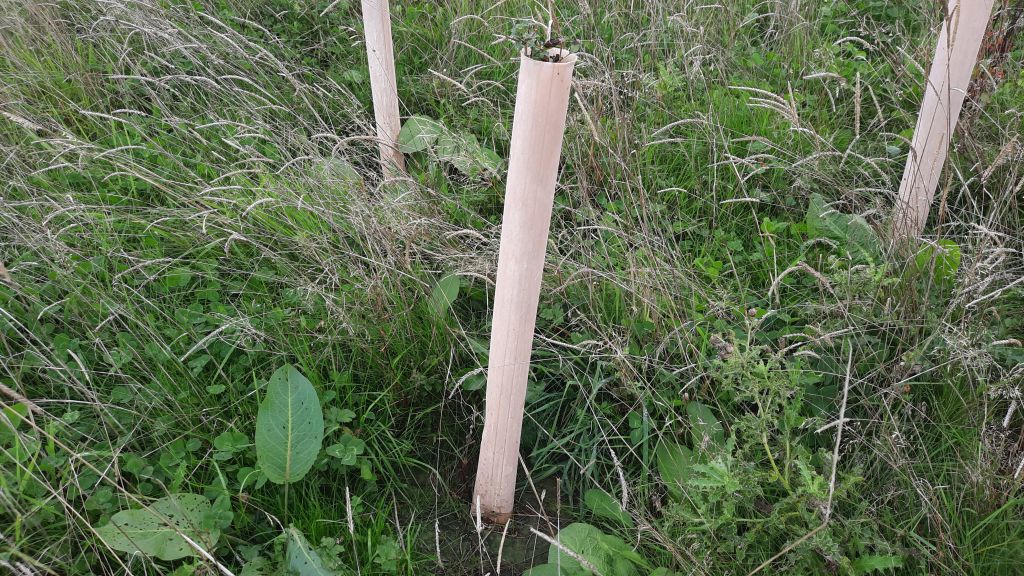
All trees have been planted using a sheep wool mulching mat, pegged in place with bamboo. They have also all been planted in 75cm tree guards for scrub trees or 1.5 m gurads for standard trees.
The wool mats will remain in place and be allowed to decompose naturally over time. This will provide protection against competitive weeds and help retain moisture during dry periods. Wool mats are also thought to be a deterrent to deer
In Bathford Brook trees were planted at medium density 925 stems /ha. They were planted in species groups of five with larger standard trees at intervals.
In Clay Pits the scrub woodland makes up around 25% of the area. It too is planted at medium density with species groups of five interspersed with standards and surrounded by grassland and meadow.
Care and Maintenance
Beat up will take place during 2026/2027 planting season.
The sheep mulch mats will remain in place as they degrade. Early evidence suggests that the mats are beginning to degrade but are continuing to provide benefits.
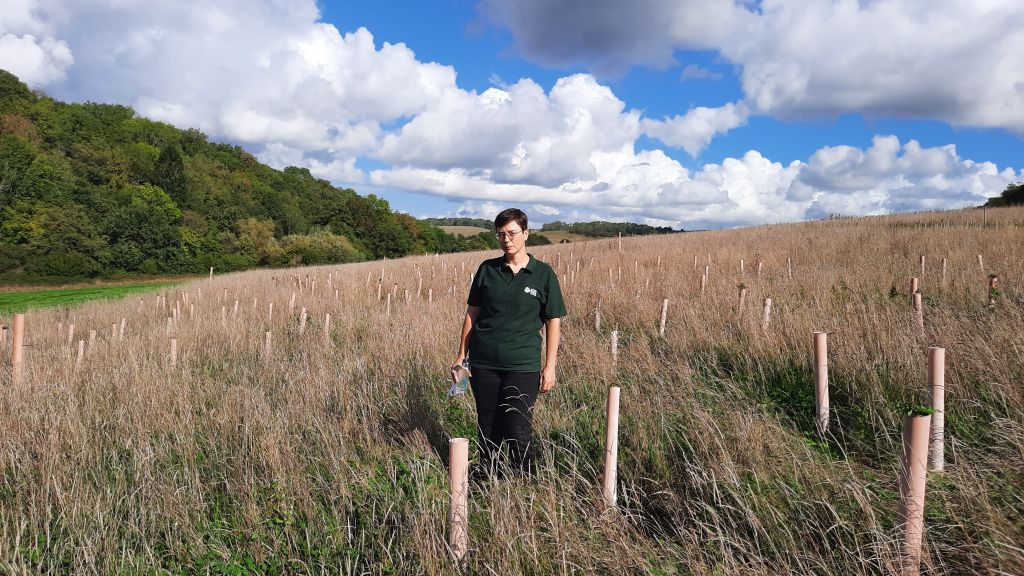
Following successive heatwaves in 2026 some plantings suffered but many species, hawthorn and blackthorn in particular, are showing regrowth following rains and the end of the heatwaves.
Weeding is scheduled for 2026 and 2027
In some areas firebreaks have been created to limit any wildfire threats.
Looking Ahead
The woodlands will continue to be monitored and the wildflower meadows adjacent to them will be mowed and cared for. Wildlife monitoring will continue.
Access to the site will be opened up with new footpaths. Educational activities are being planned for adults, young people and children as the education hub develops
The final major planting on the site is a fruit orchard which is being planted in the 2026/2027 season.
More Information
If you are interested in learning more about this project, please email us at rfshq@rfs.org.uk